

Buying glass jars, bottles or drinkware from China looks simple until the first shipment arrives: walls of uneven thickness, lids that do not seal, logos that rub off, and cartons crushed in the container. Most of these problems are decided long before production starts — they are decided by which manufacturer you choose. This guide walks through what experienced importers check before placing a first order, so you can judge a glass factory on evidence, not on a price sheet alone.
1. Confirm the factory actually makes what it sells
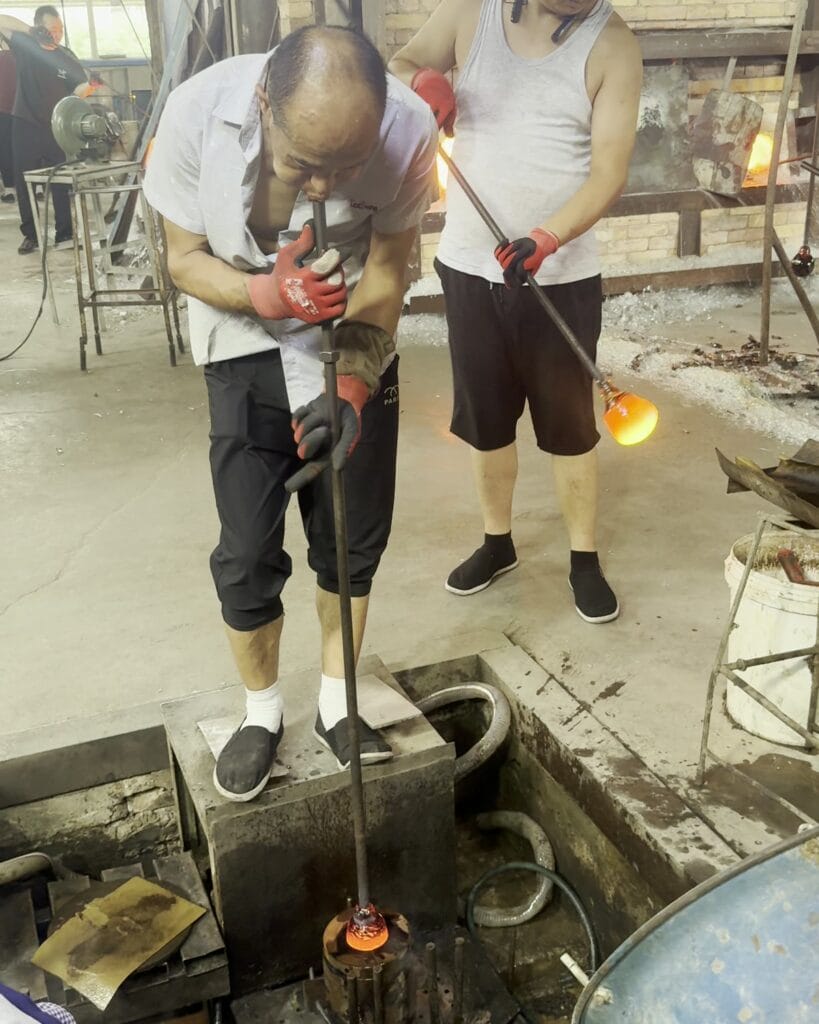
Some suppliers are trading companies presenting factory photos they do not own. A real manufacturer can show you its own production, live: melting furnaces, forming machines, annealing lehrs and workers blowing or finishing pieces by hand. Ask for a video call from the workshop floor, or recent unedited production videos. At QJYY Glass, our own lines cover both machine-formed glassware for volume orders and hand-blown production for oversized or decorative pieces — and we publish factory-floor videos every week so buyers can see the process before they ever talk to us.
2. Look at the mold library before you pay for a new mold
Opening a private mold costs money and time. An established glass factory keeps a large library of existing molds for jars, bottles, candle holders and glasses in common capacities. Always ask first:
- Do you have an existing mold close to my size and shape?
- Can the capacity, mouth diameter or finish be adjusted on an existing mold?
- If we open a new mold, who owns it, and how is the sample approved?
Starting from an existing mold usually gets you to samples faster and keeps the first order economical. Custom molds make sense once the design is proven in your market.
3. Check the customization is done in-house
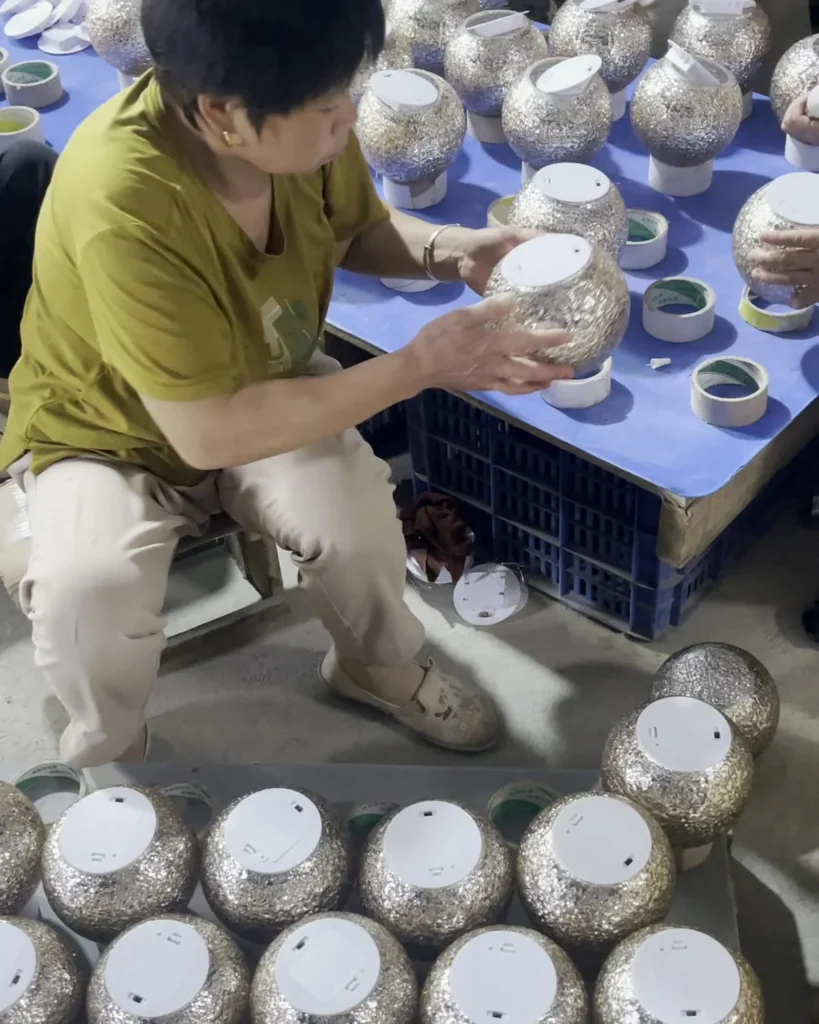
For private-label and promotional glassware, the logo work matters as much as the glass. Ask where each process happens: silk-screen printing, decal firing, sandblasting or engraving, frosting and color spraying. In-house decoration means the factory controls registration, firing temperature and adhesion itself, instead of sending your goods to a third party you will never see. Request a decorated sample — not a photo — and rub, wash and scratch the logo before you approve it.
4. Take samples seriously, and check them like an inspector
Approve samples against a checklist, not a feeling:
- Dimensions and capacity: measure height, diameter and fill volume against your specification.
- Wall thickness and weight: thin spots show up as breakage later, usually in your customer’s hands.
- Finish and sealing: the mouth must be smooth and flat so lids and caps seal; test with the actual closure you will use.
- Clarity and defects: hold the glass against light and look for stones, seeds (tiny bubbles), streaks and mould marks beyond an acceptable level.
- Annealing: poorly annealed glass cracks weeks later. A factory that controls its lehr temperatures can explain its process; one that cannot, will change the subject.
Only sign off the sample when it passes — mass production should be measured against this approved unit, and a good factory will keep a sealed counter-sample for comparison.
5. Ask how they pack for export, in detail
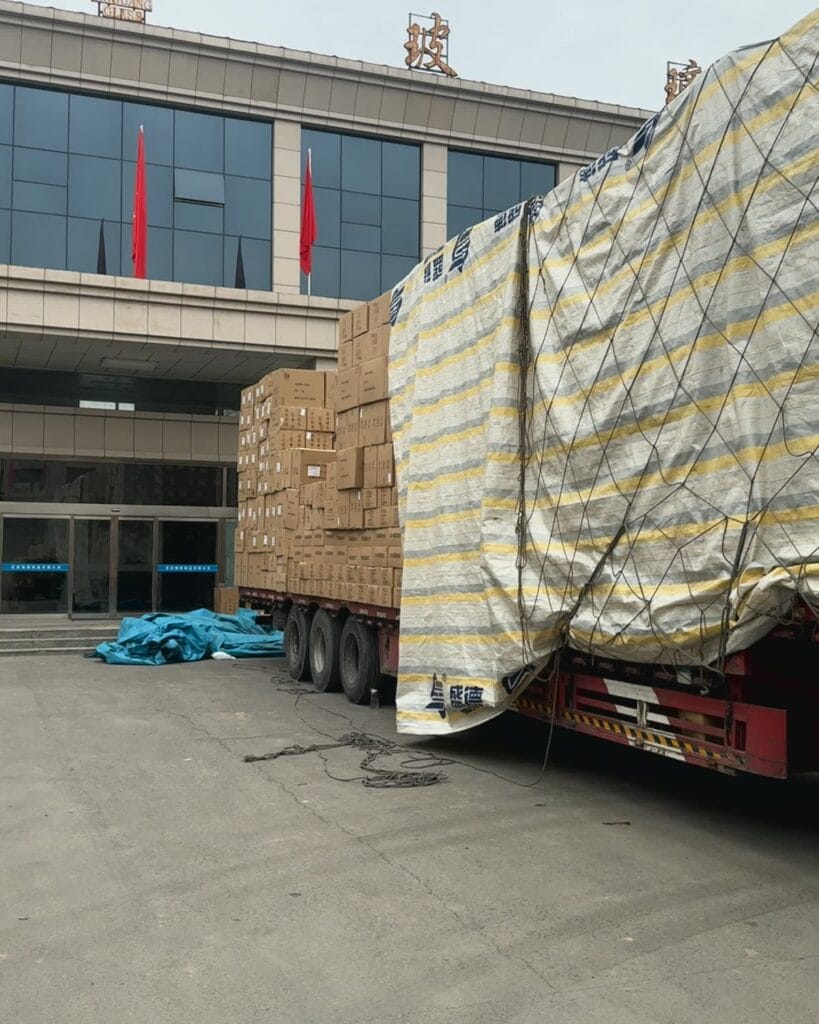
Glass rarely breaks in the factory; it breaks in the container. Ask for the exact packing method for your product: individual wrapping or dividers, inner boxes, master carton strength, palletizing, and how cartons are braced inside a 20ft or 40ft container. A factory that exports regularly will answer with photos of real loaded containers, not a brochure. This step decides your breakage rate more than any other.
6. Judge communication during the small order
Start with samples or a trial order and watch how the factory behaves: Do they confirm specifications in writing? Do they send production photos or short videos without being chased? Do they flag problems early, or go silent until shipping day? The trial order is the cheapest audit you will ever buy.
Ask what testing the factory can support
If your glassware touches food or drink — honey jars, storage jars, drinking glasses — your market may require food-contact compliance testing, such as migration testing for the EU or FDA-related requirements for the US. Raise it early and ask two plain questions: what test reports does the factory already hold, and can it arrange third-party testing on your actual product before mass production? A factory that answers plainly, including telling you honestly what it does not have, is safer than one that promises every certificate on earth. At QJYY Glass, our quality management system is ISO 9001 certified, and we are happy to share the certificate with buyers on request.
Red flags worth walking away from
- Prices far below every other quote, with no explanation of where the saving comes from.
- No factory address, or refusal to show live production video.
- Every question answered with “no problem” — including ones that should be a problem.
- Pressure to pay the full amount before samples are approved.
Getting a quote that means something
A useful quotation needs a few inputs from you: the product or a reference photo, capacity and dimensions, quantity per order, customization (logo, color, lid or cap), and your destination port. Send those, and a serious manufacturer can quote a real price instead of a placeholder. Quantities, sampling and lead time depend on the design and the decoration involved, so be wary of any one-size-fits-all promise — ask for the numbers for your product, in writing.
Quick answers
Can I put my own logo on the glassware?
Yes. Decoration such as screen printing, decals and frosting is done in-house at QJYY Glass. Send us your artwork and we will confirm the best method for your design during sampling.
Can I start from an existing design instead of a new mold?
Yes. Our existing mold library covers common jars, bottles, candle holders and drinkware, and starting from an existing mold is faster than opening a new one. A new mold is only needed when your design requires it.
How do I get an exact price?
Send the product or design, quantity, customization, destination port and trade term. Every order is different, so we quote per project rather than publishing fixed prices — and a detailed enquiry gets a detailed, itemized quote back.
Do you export, and how is the glassware packed?
Yes, we export worldwide. Glassware is packed in export cartons with dividers as standard, and palletized or retail packaging can be arranged per order.
Working with QJYY Glass: we manufacture glass bottles, jars, candle jars and holders, drinking glasses and decorative glassware in China, with OEM/ODM customization and export packing for wholesale and private-label buyers. Send us your design or pick from our existing range in the catalog, and we will come back with a quotation and a sampling plan. The fastest way to reach us is WhatsApp, or use the quote form if you prefer email.